The vendor dashboard is where home sellers are led to find the best estate agent to sell their home. This is where GetAgent makes it money, as with the vendor they have no leads to send to agents and without leads GetAgent cannot make a revenue.



Vendor dashboard
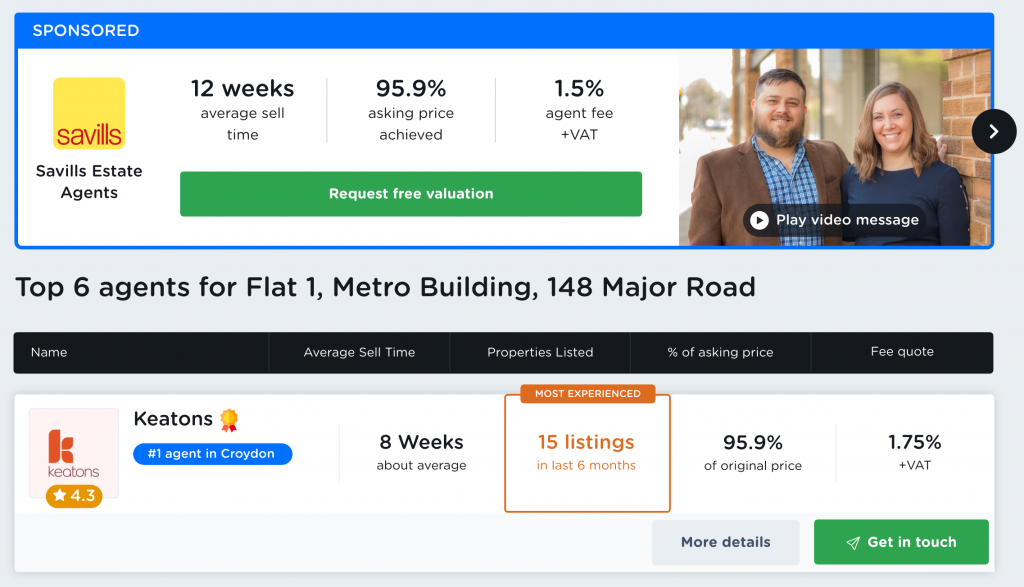
The problem
Understanding customer needs
As the product design lead, I directed my team’s focus towards enhancing the B2C/customer-facing dashboard at GetAgent, recognising its significance in generating business and revenue. During a meeting with the CTO, I was presented with data indicating a significant 70% drop in traffic on the vendor dashboard. This compelled us to initiate a thorough investigation.
To gain insights, we conducted a series of interviews and user testing. Our findings revealed several crucial factors contributing to the drop-off in customer engagement:
- Lack of Sufficient Information: Customers were dropping off because the agent’s information page did not provide enough relevant details to help them make an informed decision about which agent would be suitable to sell their house.Some customers even went as deep to state they needed personal information including personality
- Contact Information Accessibility: Customers desired quick access to the agent’s contact number but found it missing from the website, leading them to leave the platform to search for it elsewhere.
- Immediate Response Expectations: Customers anticipated an immediate response upon contacting an agent. If this didn’t happen, they tended to reach out to the agent directly after searching for them on Google.
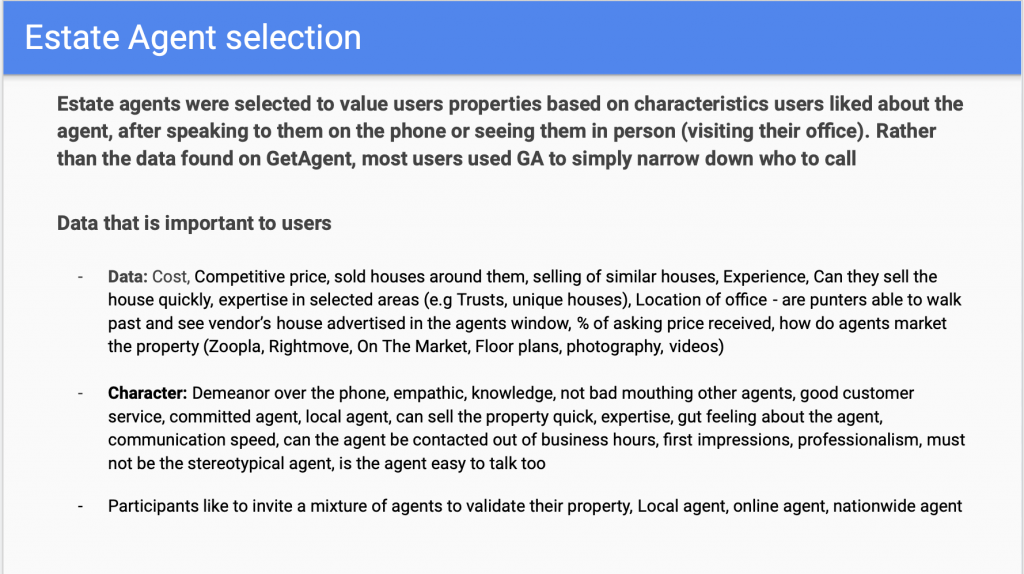
So I put together a problem statement, included a pack that included quotes from users, their pain points and many other relevant information – and called a 30 person ideation session from individuals from all over the business. Sales, customer service, product.
Below is the result of the session:

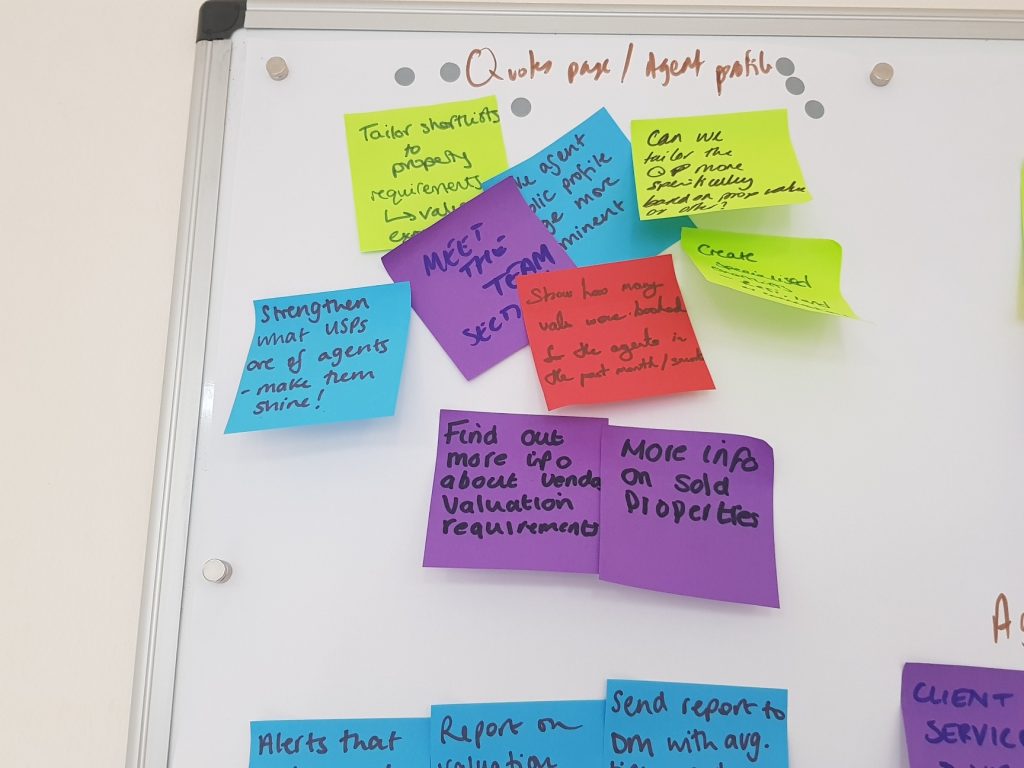
As a team we decided focusing on the agent profile / insights page was probably the best approach.
Area of improvement 1
Agent Profile
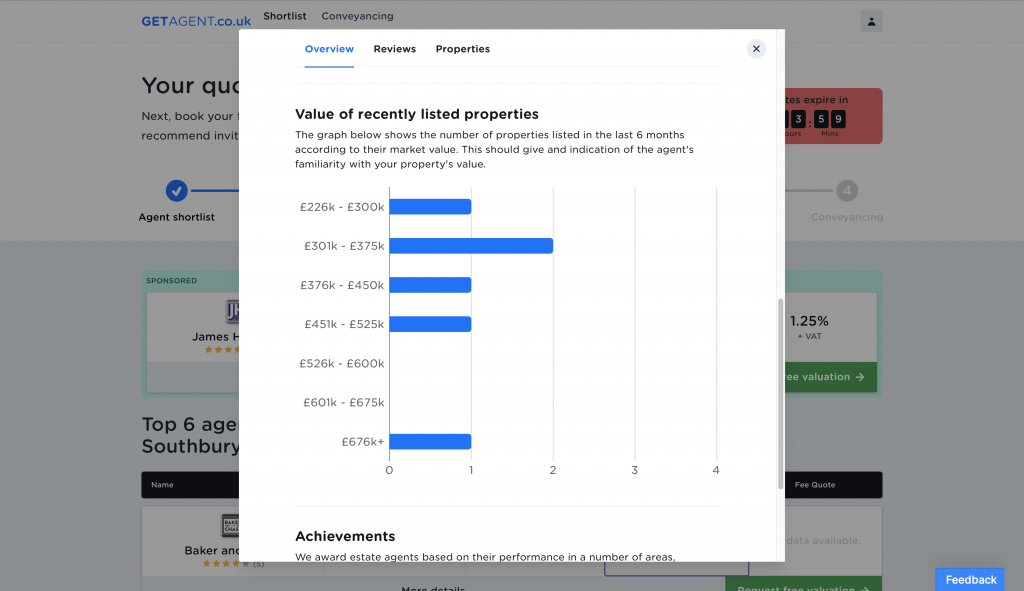
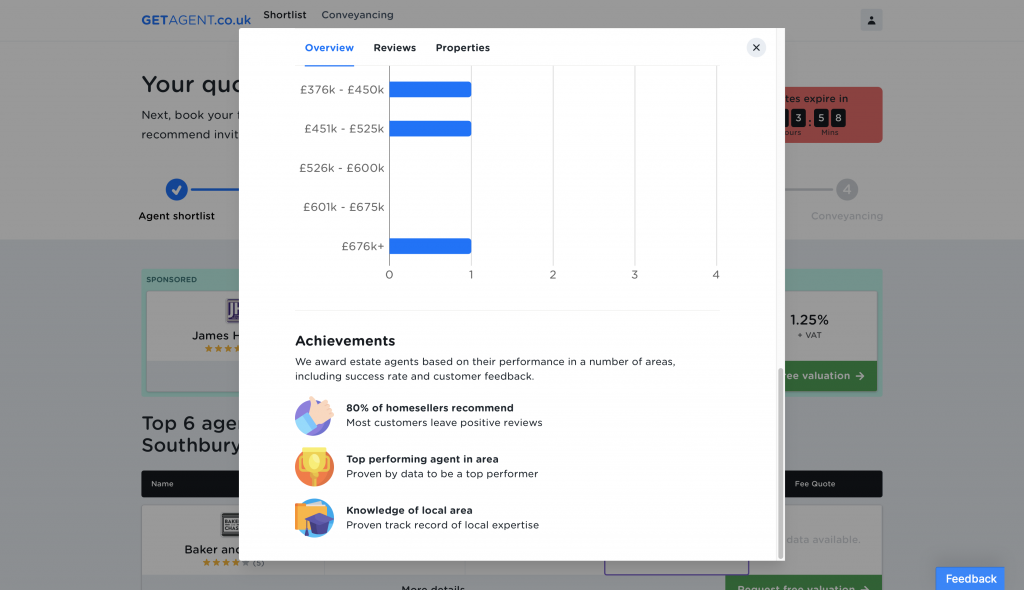
After recognising that the agents’ profile was the initial touchpoint causing UX issues and understanding customers’ desire for more data on specific aspects, such as:
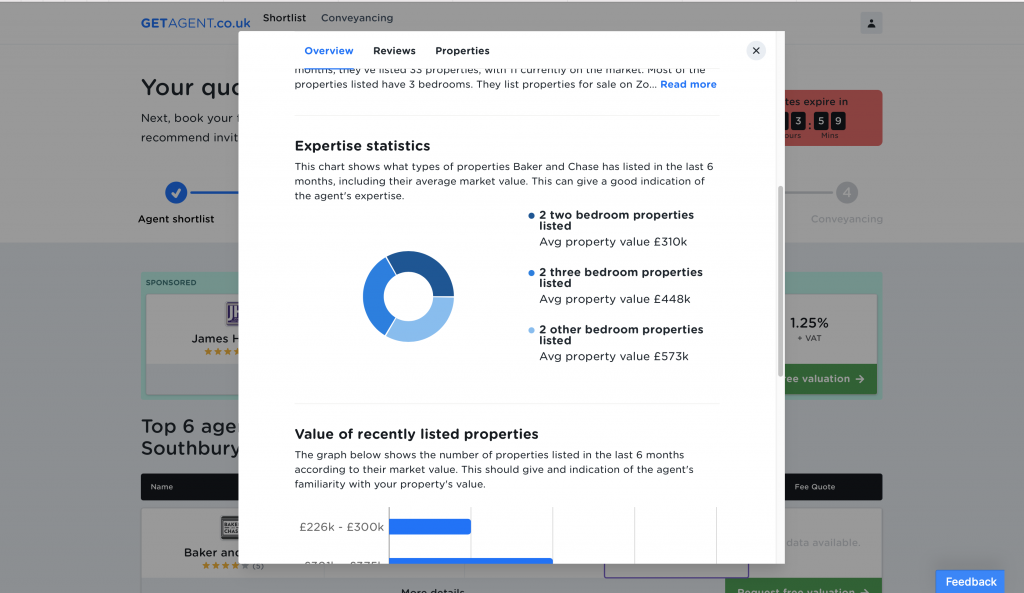
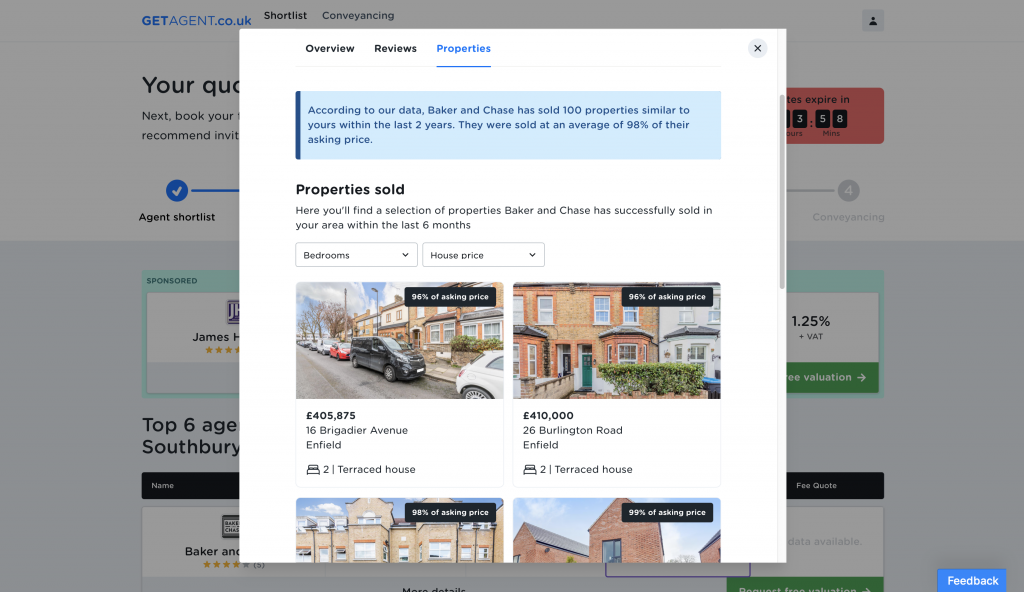
- The agents capability to sell similar properties to theirs
- How quickly the agent call sell properties
- The agent expertise in selected areas (Trusts, unique houses)
- The agents location – As they wanted to punters to see their house on agents windows
- Information on the agents character
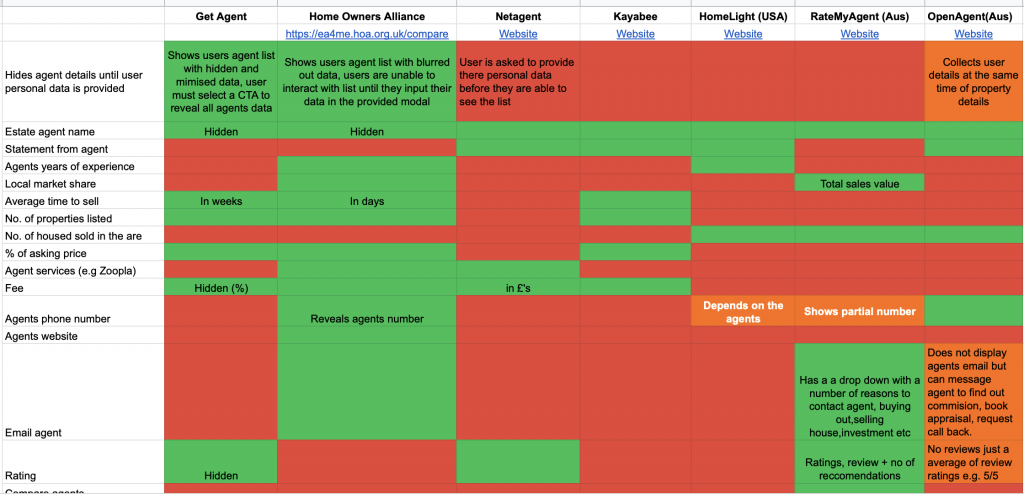
I conducted a low level competitors analysis to understand what competitors were doing. I even looked at international companies to see what they were going.
This analysis involved closely examining what other competitors were offering in the market. I didn’t limit my research to local competitors but also extended it to international companies to gain a broader perspective on the latest industry trends and practices.
By conducting this comprehensive competitors analysis, I aimed to gain valuable insights and identify best practices that could inform the refinement of GetAgent’s product offerings and improve the overall user experience. This data-driven approach would help us make informed decisions and align our product with the evolving needs and expectations of our customers.
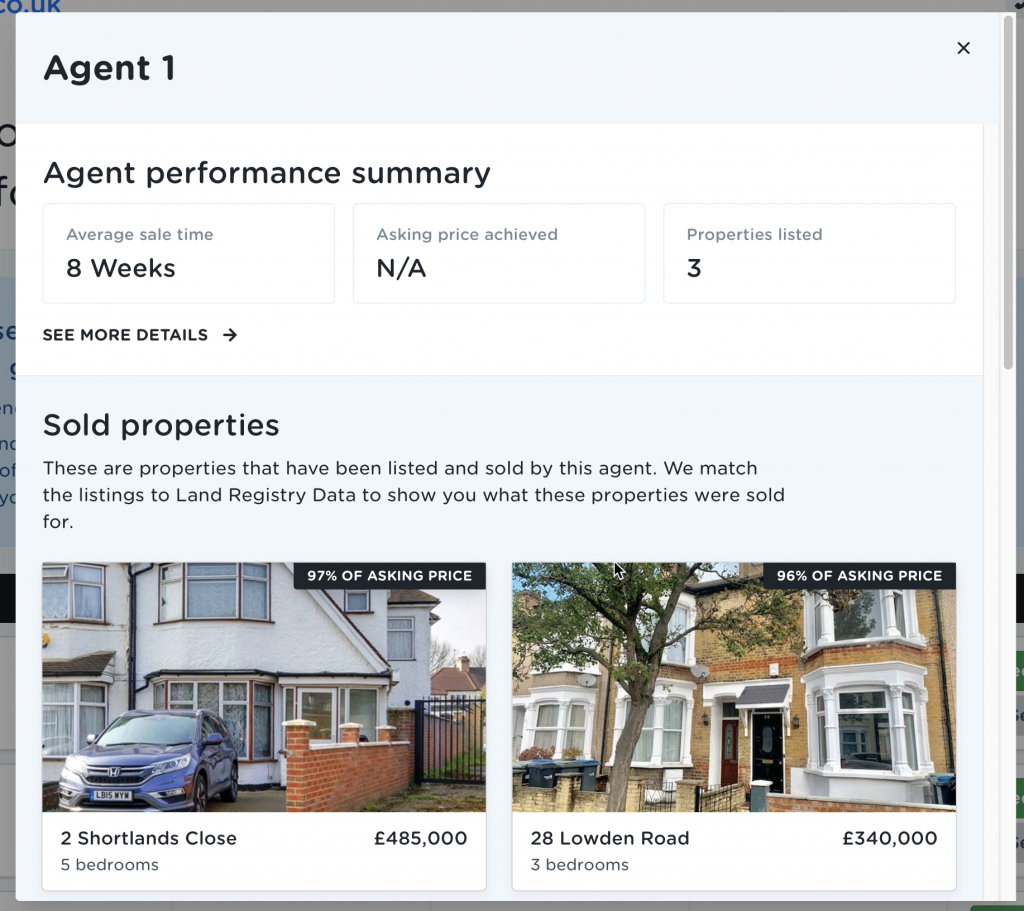
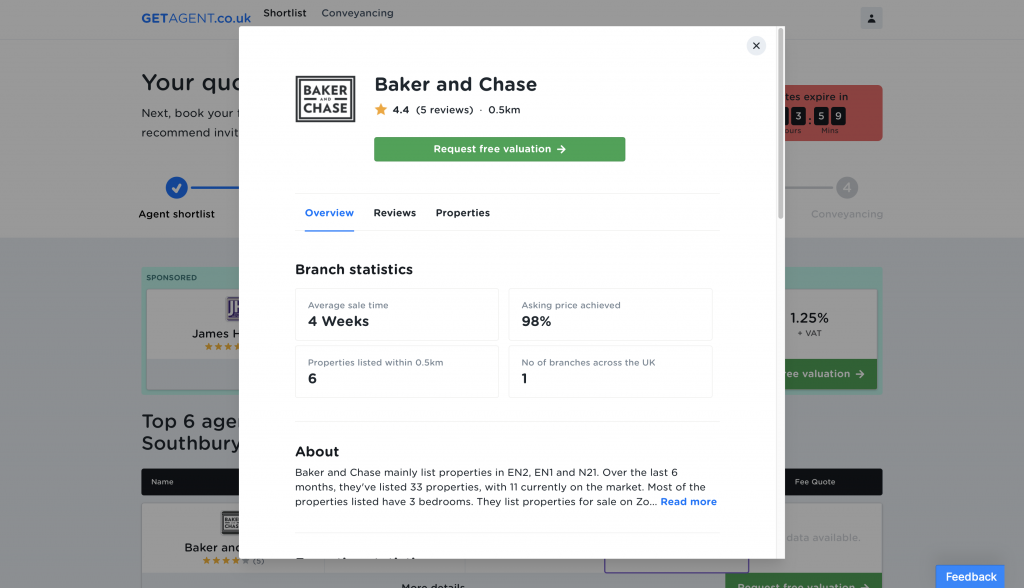
After conducting user testing, the feedback we received for the designs was overwhelmingly positive. To validate the results further, we proceeded with A/B testing the designs for a duration of 6 weeks, ensuring sufficient data accumulation for a well-informed decision.
At the conclusion of the 6-week period, we discovered that the new designs achieved a remarkable conversion rate of 160% higher than their counterpart. This confirmed the effectiveness and success of the updated designs.
The original
Updated designs
Area of improvement 2
Book a valuation
In the initial ground of user testing we found that a lot drop off was due to:
- Customers clicking book valuation and it booking immediately, customers expected the book valuation button to open into a level 2 and be able to see a contact number to call the agent and/or wanting to leave a email
- Customers often got frustrated and we found through data that if agents called vendors within 2 days they were 90% more likely to secure the vendor, but after 3 data the likelihood of securing the deal dropped to 20%,
Recognising the importance of enabling direct customer-agent communication, it became evident that customers must have the opportunity to contact agents directly. However, implementing this change faced considerable pushback due to the existing contracts that agents had signed. Despite the challenges, GetAgent decided to modify the contracts based on the compelling data presented in the previous bullet points, indicating the need for this improvement.
With the decision made to enable direct contact, the next step was to determine the preferred ways customers wanted to communicate with agents. To gather insights, we sent out a survey, seeking valuable feedback from our customers. This survey aimed to identify the most convenient and preferred channels through which customers desired to engage with agents, allowing us to enhance the overall customer-agent interaction experience.
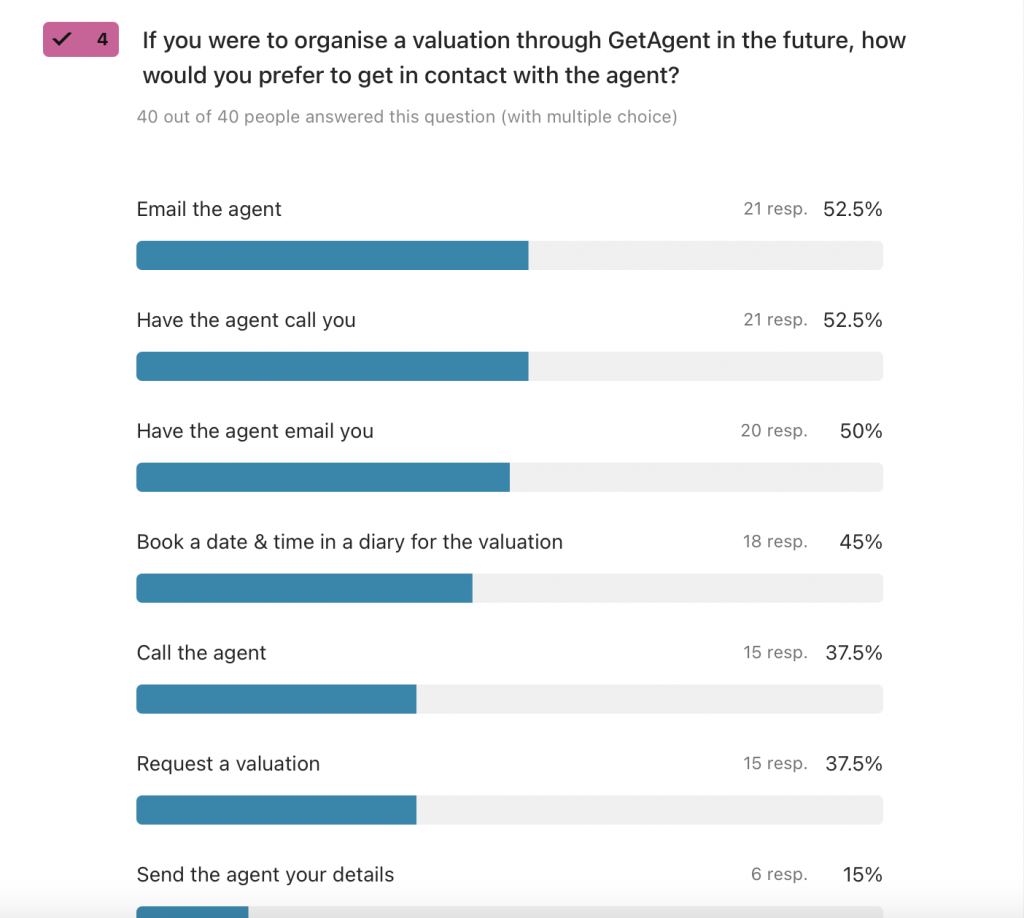
Results from user survey.
Upon reviewing the above results, we came to the realization that a one-size-fits-all approach was not suitable for customer-agent communication. Initially, we had hypothesized that calling an agent would be the most preferred method, but the data revealed a surprising finding. Instead, we were taken aback to discover that sending an email and having the agent subsequently call the customer emerged as the most popular and preferred modes of communication among our customers. This valuable insight highlighted the need for offering diverse communication options to cater to individual preferences and convenience.
So I designed the below:
New vendor contact form.
As we made changes to the ways customers interacted with agents, we recognized the importance of updating the initial card they interact with to align with the new communication options. Additionally, during this process, we became aware that not all agents displayed on the platform were signed up to GetAgent. To address this, we decided to prioritize and prominently highlight our own agents above the rest.

Original user flow.
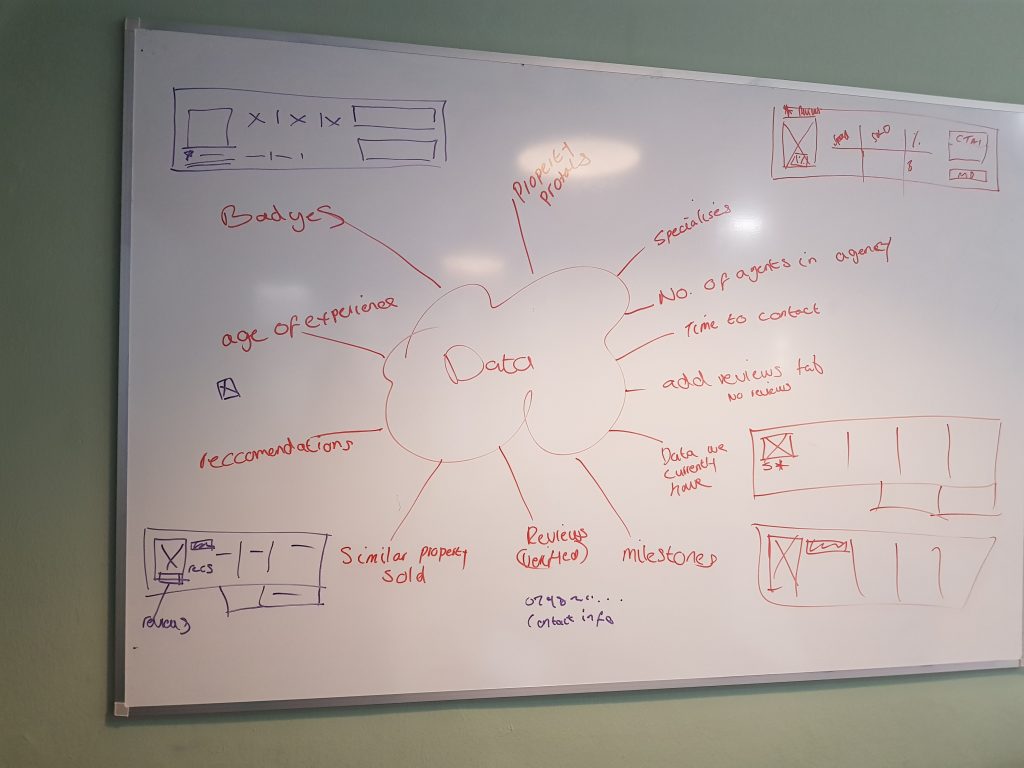
White boarding exercise.
The original
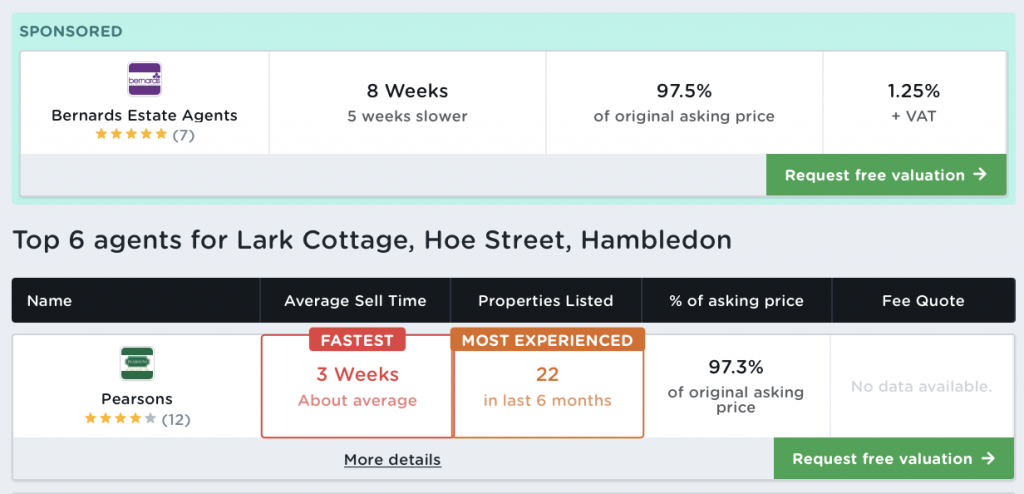
Updated designs
With this changes some unpredicted things happened:
- 9% more estate agents signed up to estate agent – what we did not know is many estate agents did not sign up to GetAgent as they stated GetAgent was promoting them for free. They stated to loose the free business so signed up instead.
- Vendor conversion rate high rocked by 32%.
- Many of our estate agents were not happy they did not think GetAgent was promoting them enough.
The Vendor dashboard also had a blurred vendors list until they entered their details. This kept on coming up on our user research, so we wanted to test if it made a difference so we conducted a A/B test to see what the results would me. The A/B results showed that the blurred shortlist worked better so we kept it the same